
About All ToursHelicopter Ride Tours2-Day ToursFrom Buenos Aires ToursBoat ToursPrivate ToursBoth Sides ToursArgentina Side ToursBrazil Side ToursFull Moon Tours Directions Hours & Fees
Find Tours 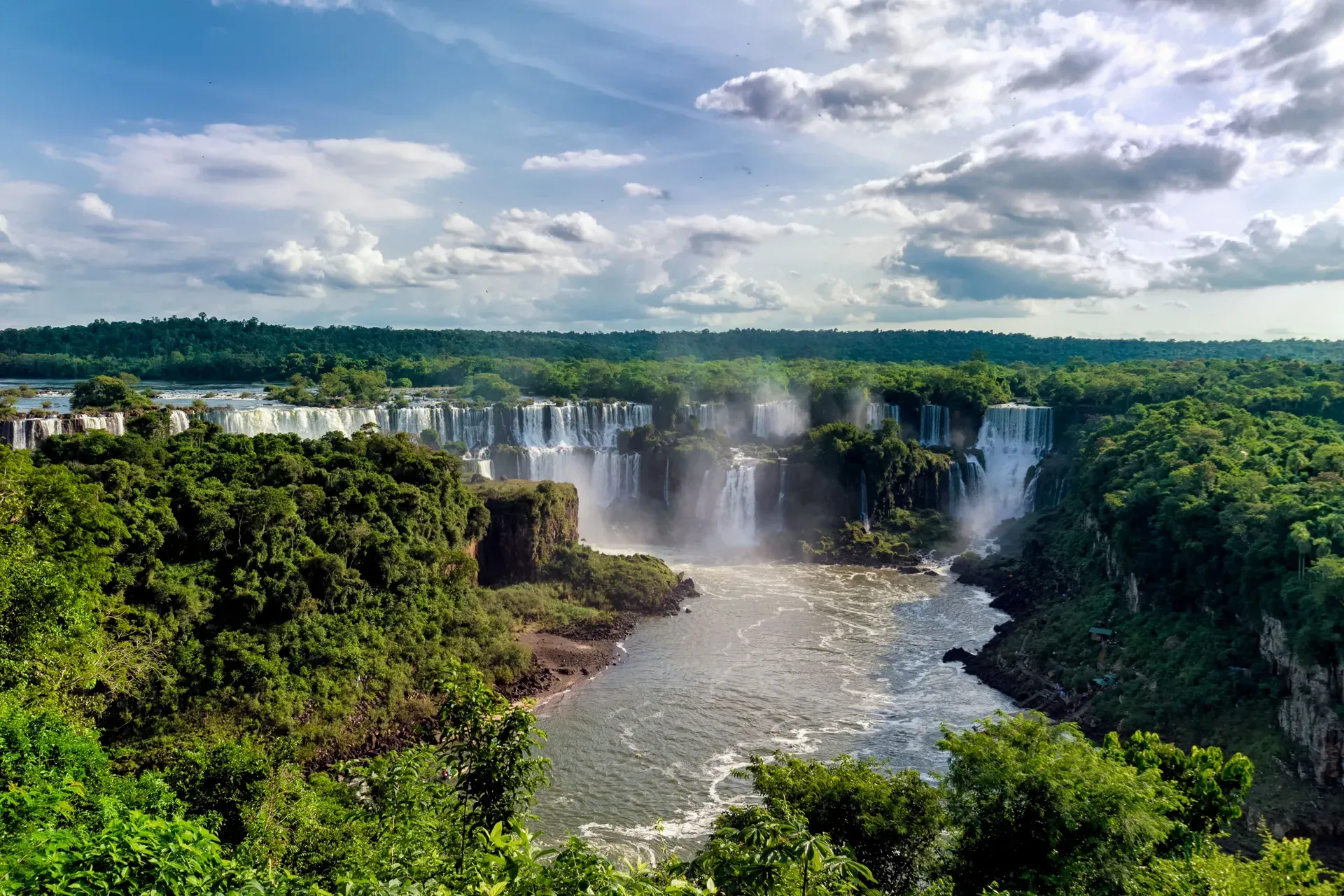
Explore the stunning beauty of Iguazu Falls with our selection of guided tours covering both the Argentine and Brazilian sides. Whether you prefer a thrilling boat ride under the cascades or a private day trip with seamless border crossings, you will find the perfect way to experience this UNESCO World Heritage site.
 Free Cancellation
 Explore Iguazú Falls via walking trails, an ecological train, and a boat ride directly to the base of the cascades.
 Free Cancellation
 See Iguazu Falls from every angle with a full-day tour covering both the Argentine and Brazilian sides.

Visit Iguazu Falls on the Argentina-Brazil border with private transfers, guided park tours, and optional flights.
 Free Cancellation
 Explore Iguazú Falls with a professional guide, including hotel transfers, park trails, and the Devil’s Throat.
 Free Cancellation
 Experience the scale and power of Iguaçu Falls from both the Argentine and Brazilian sides on a private day trip.
 Free Cancellation
 Go beyond the waterfalls to explore the hidden history, native legends, and diverse wildlife of Iguazu National Park.
 Free Cancellation
 Explore the Argentinian side of Iguazu Falls, home to 80% of the system's cascades, on a full-day guided tour.
 Free Cancellation
 Visit both sides of Iguazú Falls on a guided tour through the rainforest with assisted border crossings.
 Free Cancellation
 Explore both the Argentine and Brazilian sides of Iguaçu Falls in a single day with a trilingual guide.
 Free Cancellation
 Walk the Brazilian trails of Iguazu Falls for panoramic views of the Argentine side and the massive Devil's Throat.
Read what travelers share about their experience visiting Iguazu Falls — from practical tips to personal highlights.

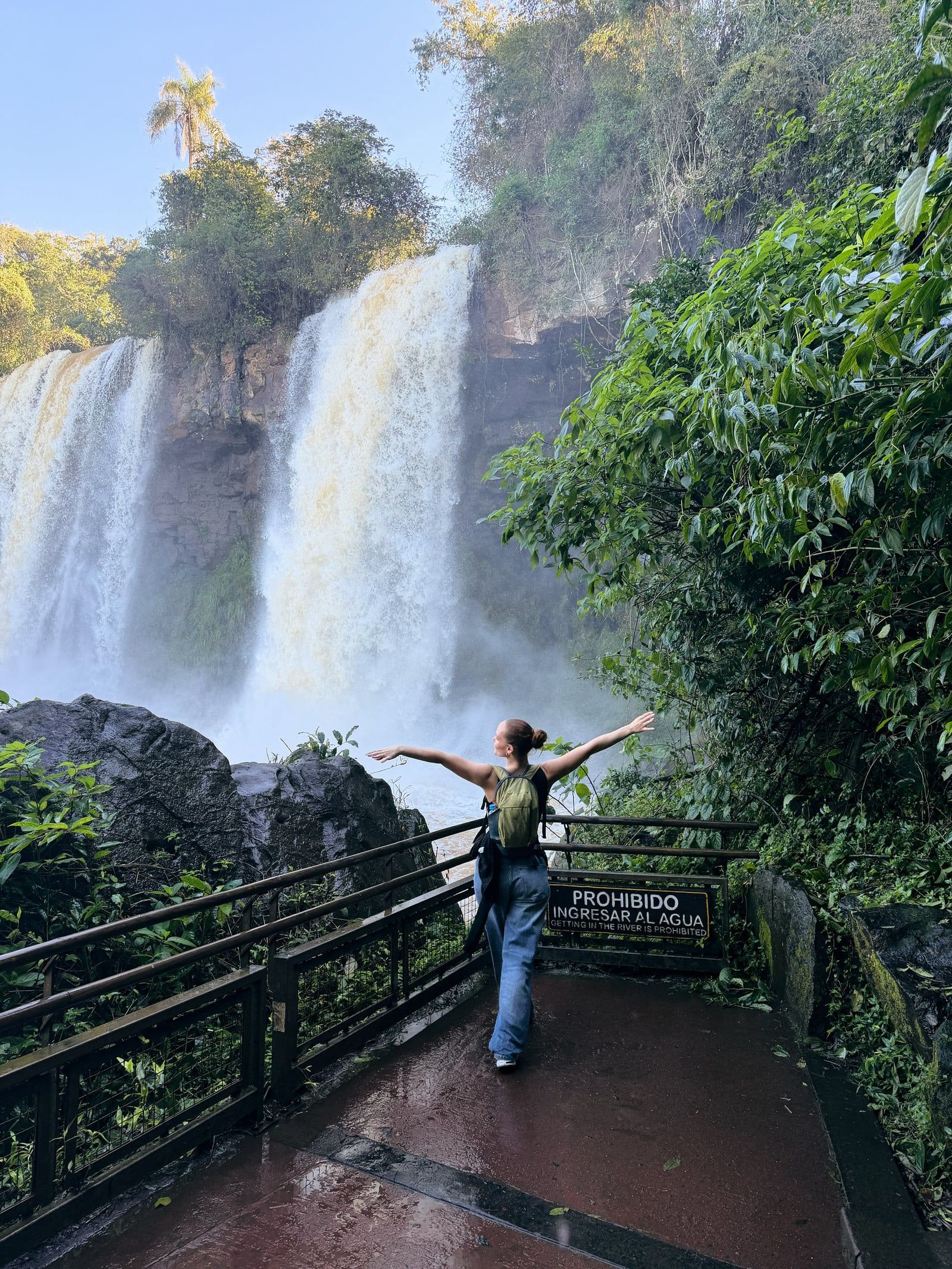
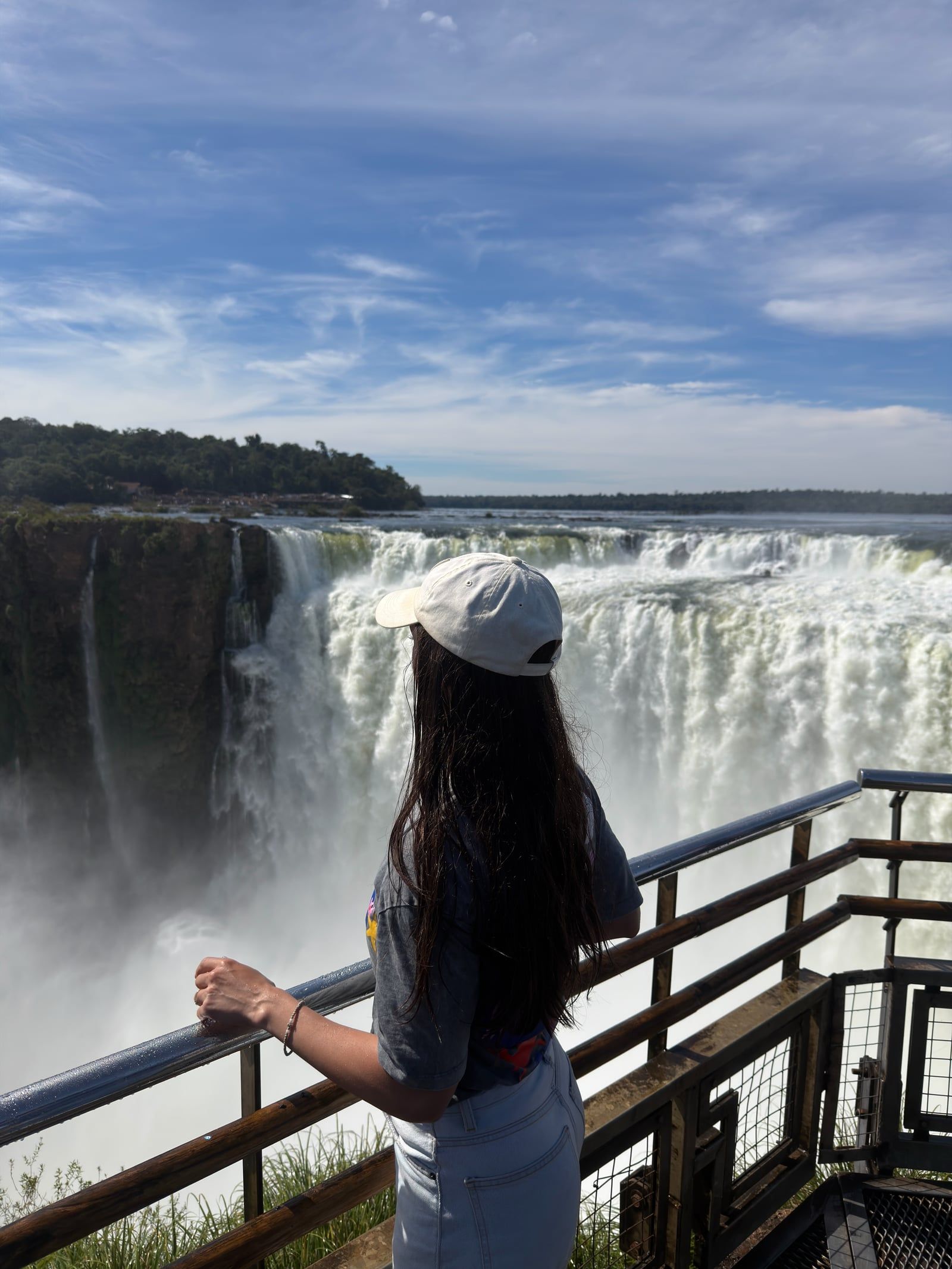
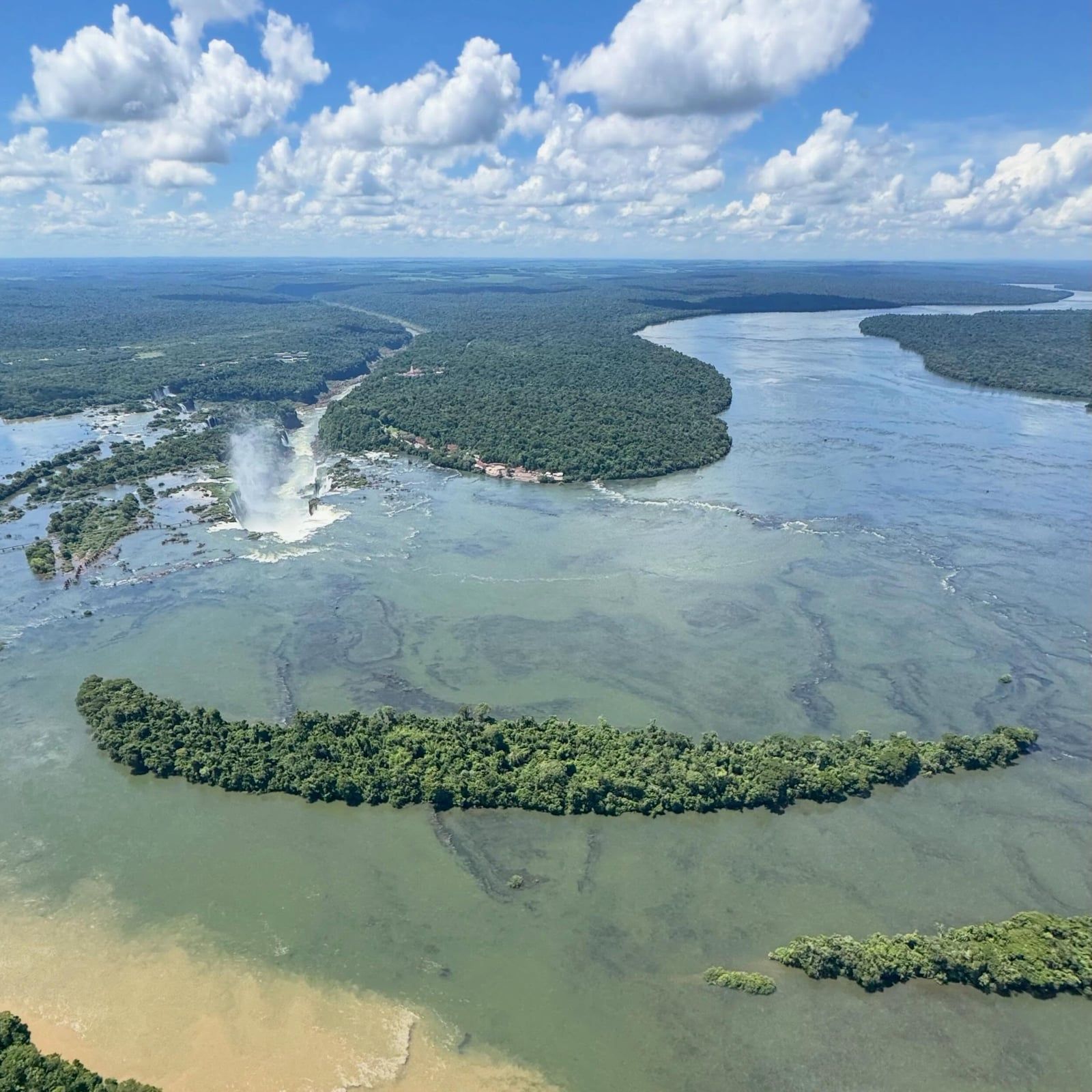
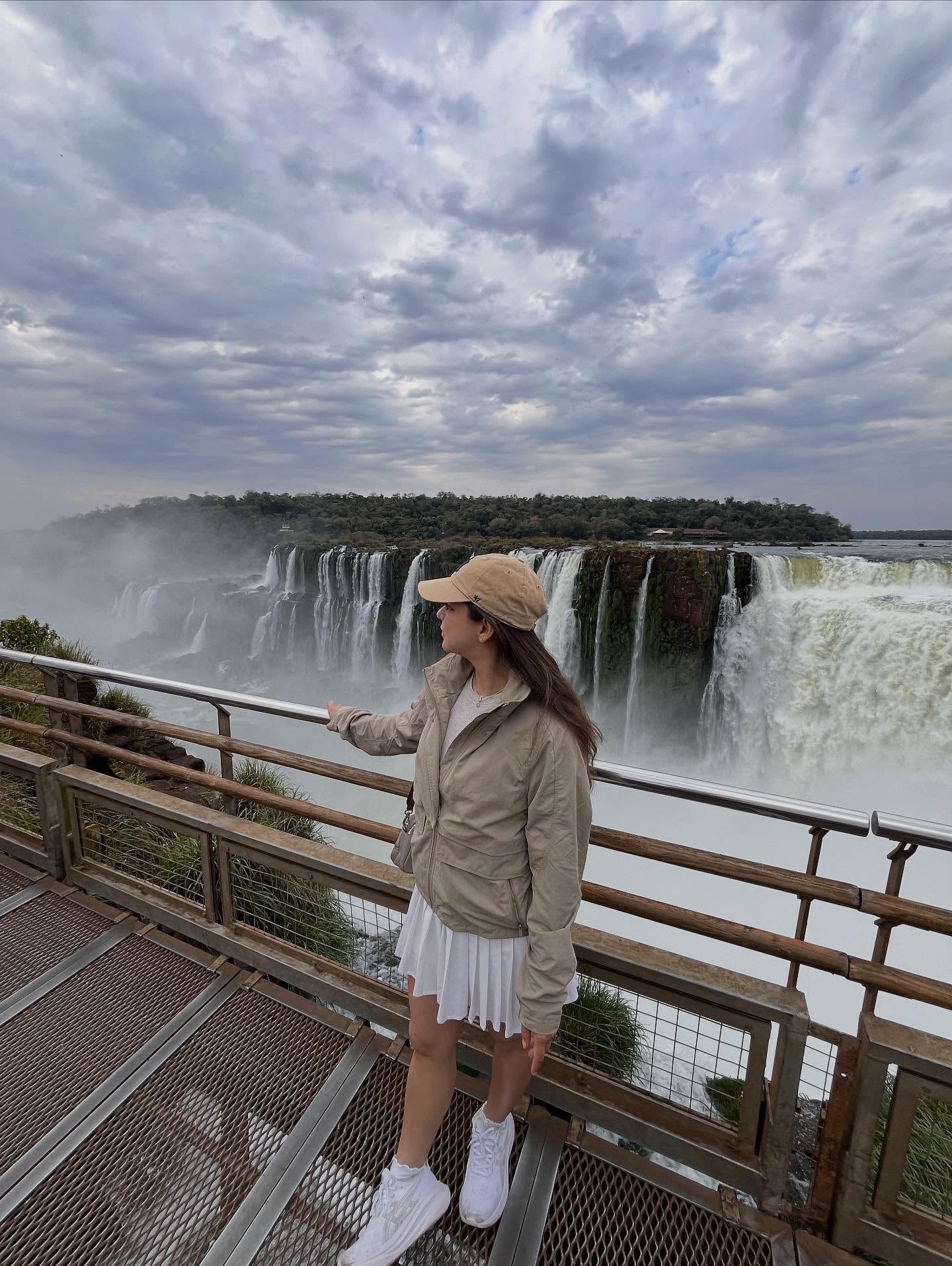
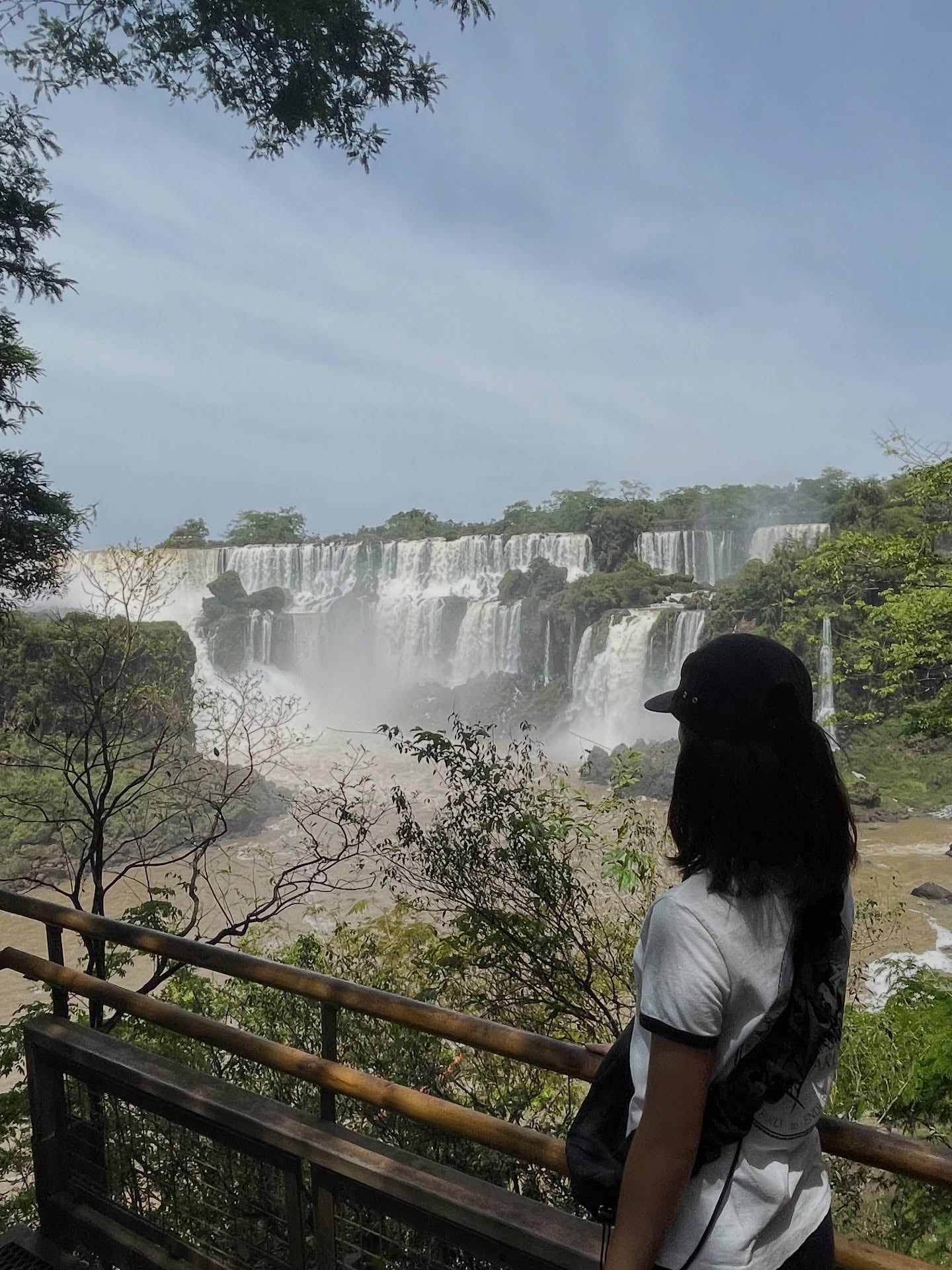
Visiting Iguazu Falls is a sensory overload of roaring water, dense jungle, and vibrant wildlife. Tours offer a variety of ways to experience the world's largest waterfall system, from peaceful train rides through the rainforest to adrenaline-pumping speedboat excursions right into the mist.
Stand just 50 meters away from the edge of Garganta del Diablo, an 82-meter-high horseshoe-shaped canyon where the water's roar is absolutely deafening.
Walk the extensive Upper and Lower Circuits on the Argentine side, navigating suspended steel walkways that put you right over the rushing cascades.
Race up the turbulent river rapids in a twin-engine speedboat. The captain will drive directly into the waterfall spray, guaranteeing you get completely soaked.
Hike the 1.4-kilometer paved trail on the Brazilian side for unmatched, wide-angle views of the entire waterfall system, ending at a spectacular cliffside elevator.
Ride an open-air, narrow-gauge train through 7 kilometers of dense subtropical rainforest to reach the main trailheads on the Argentine side.
Many tours cross the international border, allowing you to experience both the immersive Argentine trails and the sweeping Brazilian vistas in a single trip.
Planning an excursion to Iguazu Falls requires a bit of logistical preparation, especially if you want to cross international borders or take the boat rides. Here is what you need to know before securing your spot.
You can choose from full-day tours that cover both the Brazilian and Argentine sides, private tours with fast-lane border crossing, half-day bike tours, or comprehensive packages that include jungle trucks and speedboat rides.
Most tour operators do not include the national park entrance fees in their prices. You will need to purchase these separately, either online in advance (highly recommended to skip queues) or in local currency at the gates.
If your tour crosses between Argentina and Brazil, you must bring your physical passport for immigration stamps. Depending on your nationality (like citizens of the US, Canada, or Australia), you may also need to arrange a Brazilian visa beforehand.
The popular speedboat rides under the falls have strict safety rules. Children under 12 (or 13, depending on the operator) are not allowed. Pregnant travelers and those with back, heart, or chronic lung conditions are also prohibited from boarding.
Leave your white sneakers at home, as the region's iron-rich red dirt will stain them instantly. Wear quick-dry clothing, sturdy non-slip footwear, and bring a waterproof bag to protect your phone and camera from the heavy mist.
Most tours include roundtrip transfers from centrally located hotels in Puerto Iguazu (Argentina) or Foz do Iguaçu (Brazil). If you are staying at an Airbnb or outside the downtown zones, you may need to meet at a central point or pay an extra transfer fee.
The falls are highly accessible. The Argentine side is 90% wheelchair friendly with adapted steel walkways, while the Brazilian side offers step-free panoramic buses and an elevator. However, the Lower Trail and boat rides are not suitable for those with mobility issues.
The majority of standard day tours offer a full refund if canceled at least 24 hours before the scheduled departure. However, complex packages that include domestic flights from Buenos Aires are usually strictly non-refundable.
| Full-Day Both Sides Tour | Argentine Side + Boat Ride | Private Day Tour | Iguazu Bike Tour | |
|---|---|---|---|---|
| Duration | 8 - 9 hours | 8 hours | 8 - 9 hours | 3.5 hours |
| Best for | Seeing the complete picture of the falls in a single day | Adrenaline seekers wanting to get soaked under the cascades | Personalized pacing and skipping massive bus queues | Active travelers wanting a unique, crowd-free perspective |
| Includes | Bilingual guide, border crossing assistance, hotel transfers | Guide, eco-train, jungle truck, speedboat ride, dry bag | Private vehicle, fast-lane border crossing, private guide | Bicycle, helmet, accredited tour guide |
| Price from | $50 - $137 USD | $159 - $178 USD | $123 - $135 USD | $40 USD |
Both national parks are open 365 days a year, but their operating hours differ slightly.
Tip: Arrive at the gates right when they open to beat the massive tour bus crowds to the main viewpoints.
If you aren't booking a tour with included hotel transfers, getting to the parks is straightforward.
The best months to visit Iguazu Falls are the shoulder seasons: April to May and September to October. During these months, the weather is pleasantly warm, water levels are spectacular, and you avoid the worst of the crowds.
You should try to avoid January and late July. These months coincide with Argentine and Brazilian school holidays, resulting in massive crowds. January and February are also brutally hot and humid, with frequent afternoon thunderstorms that can temporarily shut down the trails.
Iguazu Falls is remarkably accessible for a natural wonder.
Elderly visitors will find the upper circuits very manageable, though the Lower Trail on the Argentine side can be strenuous and slippery. Note that the Macuco Safari trail and speedboat rides are not accessible for wheelchair users.
Both parks are well-equipped to handle thousands of daily visitors. You will find large visitor centers at the entrances, food courts, and clean restrooms scattered near the main trailheads.
Because cellular network coverage is incredibly weak inside the dense rainforest, take advantage of the free Wi-Fi zones at the visitor centers to download offline maps or the Merlin Bird ID app before you start hiking. There are also potable water stations available, so bring a reusable water bottle to stay hydrated in the extreme humidity.
To protect the UNESCO-listed biodiversity and ensure visitor safety, strict rules are enforced:
Most tour operators do not include the park entrance fees in the booking price. You will need to purchase your tickets separately, which costs around $32-$44.50 USD for the Argentine side and $22 USD for the Brazilian side. Buying them online in advance is highly recommended.
Yes, if your tour visits both sides of the falls, you will be crossing the international border between Argentina and Brazil. You must bring your physical passport to receive the necessary entry and exit stamps at the immigration checkpoints.
No. The boat rides are intense and have strict safety restrictions. Children under 12 (or 13, depending on the company) are not allowed. Additionally, pregnant women and individuals with heart conditions, spinal injuries, or chronic lung diseases cannot participate.
Wear quick-dry clothing and sturdy, non-slip hiking shoes, as the walkways get very wet from the waterfall mist. Avoid wearing white sneakers, because the iron-rich red dirt in the region will quickly stain them.
No, flying a drone is strictly prohibited in both national parks without official, pre-arranged permission. This rule is heavily enforced to protect the native birds and wildlife from noise and stress.
If you are exploring on your own, you need a minimum of two days: one full day (6-8 hours) for the Argentine side and a half-day (3-4 hours) for the Brazilian side. However, there are guided full-day tours that efficiently cover the highlights of both sides in about 8 to 9 hours.
Yes, if you are visiting the Argentine side, the gas-powered narrow-gauge train is completely free and included in your standard park entrance ticket. It connects the main entrance to the trailheads, including the Devil's Throat.
Yes, the parks are very accessible. The Argentine side is 90% accessible with adapted steel footbridges, while the Brazilian side uses panoramic buses with ramps and an elevator. Just be aware that the boat rides and certain rugged trails are not wheelchair accessible.
The Argentine side contains about 80% of the waterfalls and features extensive walking circuits that let you get incredibly close to the water. The Brazilian side is smaller but offers the best panoramic, wide-angle views of the entire waterfall system.
Yes, absolutely. Even if you don't take the speedboat ride, standing on the walkways near Devil's Throat will cover you in heavy mist. Bring a dry bag or waterproof sleeves to protect your phone and camera gear.
Browse verified tours with free cancellation and instant confirmation.
Find Tours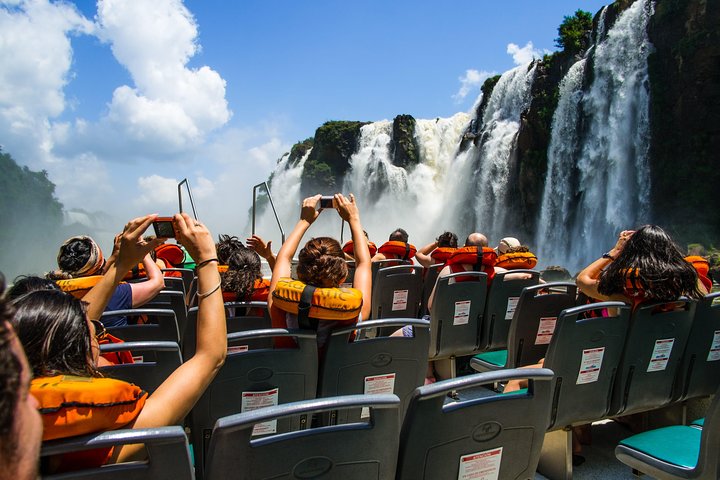
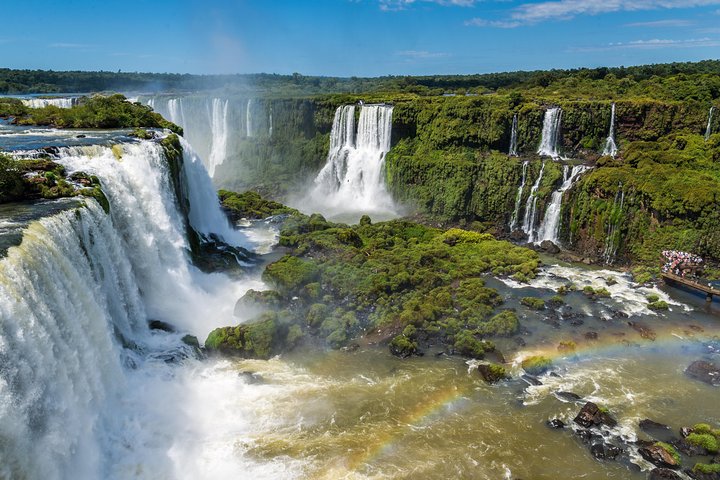

Navigate the extensive trail system of Iguazú National Park alongside an expert guide who will explain the local ecosystem. You will explore the upper and lower circuits on foot and board the park's ecological train to reach the Devil’s Throat, the site's largest and most powerful waterfall. The excursion also includes a trip through the tropical forest in an open-air truck to observe the surrounding jungle. Afterward, you will board a boat to travel upstream toward the waterfalls. This boat ride takes you directly to the base of the cascades, providing a close-up view of the falls before returning to the park trails.
For a full refund, cancel at least 24 hours before the scheduled departure time.
English, Spanish


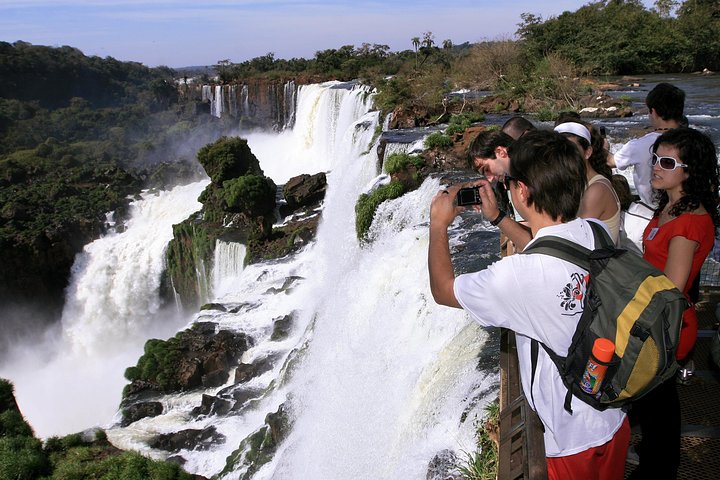
This full-day tour covers both sides of the border to provide a complete view of the Iguazu Falls system. You will start on the Argentine side, navigating the upper and lower circuits to get close to the water and stand directly above the massive Devil’s Throat. In the afternoon, the tour crosses into Brazil to offer a different vantage point. While the Argentine side puts you right in the mist, the Brazilian side provides the wide-angle panoramas necessary to appreciate the scale of the waterfalls. Between the two parks, you'll have ample time to walk the trails and photograph the scenery from multiple elevations.
For a full refund, cancel at least 24 hours before the scheduled departure time.
Portuguese, English, Spanish


This trip visits Iguazu Falls, a UNESCO World Heritage site spanning the border of Argentina and Brazil. The package includes private transfers once you arrive in Iguazu, and we can also arrange economy-class flights for your journey. You will explore the falls and the surrounding jungle, where it is common to see local wildlife near the various lookout points. A local guide will lead you through the park, explaining the area's history and natural environment. The schedule is flexible, so you can spend your time hiking the trail networks or booking a boat ride to see the falls from the river. Whether you prefer a quiet walk through the forest or a more active experience, the tour is designed to let you see the cascades at your own pace.
All sales are final. No refund is available for cancellations.
English, Spanish
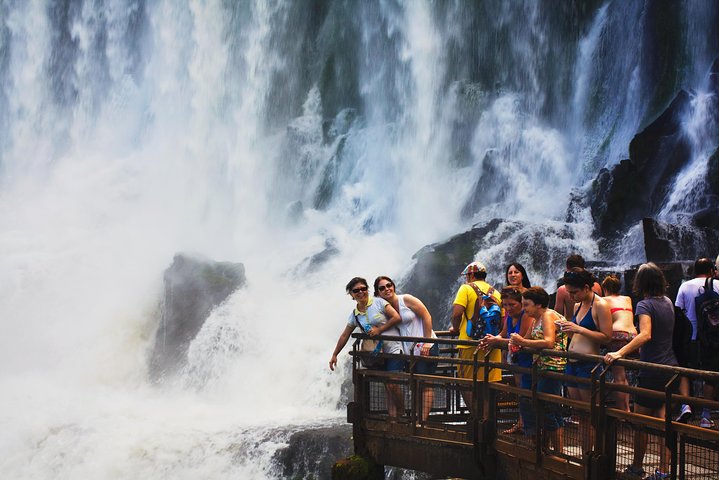
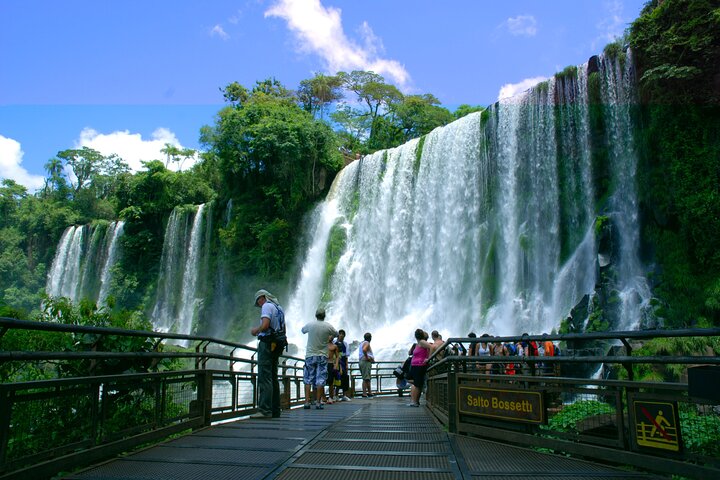

This tour provides a comprehensive visit to the Argentine side of Iguazú Falls, starting with a pickup from your hotel. Your guide will manage the park entry and logistics while leading you through the Upper and Lower circuits. These walking paths offer various viewpoints of the falls, placing you both above and below the cascading water. The itinerary includes a ride on the park’s ecological train to reach the Devil’s Throat, the most powerful section of the falls. As you walk the trails, your guide will explain the local flora and fauna and the geological history of the area. The tour focuses on providing a clear, organized way to see the park's highlights without the stress of navigating the grounds alone.
For a full refund, cancel at least 24 hours before the scheduled departure time.
English, Spanish


This private tour covers both sides of the Iguaçu Falls in a single day, providing two distinct perspectives of the waterfall system. On the Argentine side, you will walk the Upper and Lower Circuits, which lead through the rainforest to the edge of the cascades. The highlight of this section is the Devil’s Throat, where a walkway takes you directly over the park's largest and most powerful drop. The Brazilian side offers a broader, panoramic view of the entire falls complex, making it the preferred spot for photography. A single main trail leads to a bridge over the water, surrounded by the park’s native bird species and subtropical vegetation. Throughout the trip, a private guide and vehicle handle the logistics and border crossing, allowing for a flexible pace based on your interests.
For a full refund, cancel at least 24 hours before the scheduled departure time.
Portuguese, English, Italian, Spanish


This tour offers a deeper look at Iguazu National Park, moving past the famous vistas to explore the region’s rich history and biodiversity. You will learn about the first European explorer to document the falls and the historical significance of the various buildings located within the park’s protected grounds. The experience covers the stories of the indigenous people who inhabited the area long before European arrival, as well as the pivotal role Santos Dumont played in the park's creation. As you walk through the forest, your guide will point out local flora and fauna while sharing the myths and legends that have defined this landscape for centuries.
For a full refund, cancel at least 24 hours before the scheduled departure time.
Portuguese, English, Spanish


Spend a full day exploring the Argentinian side of Iguazu National Park, where approximately 80% of the entire waterfall system is located. As a UNESCO World Heritage site and one of the New 7 Wonders of Nature, this area provides the most comprehensive access to the falls. You will navigate the park alongside an expert guide who provides context on the local environment and history. The tour includes a ride on the park’s ecological train, which transports you through the jungle to the start of the primary walking circuits. From there, you can walk the various trails and catwalks that lead directly to the edge of the falls, offering a close perspective of the water and the surrounding rainforest.
For a full refund, cancel at least 24 hours before the scheduled departure time.
German, English, Italian, French, Spanish


This tour provides a comprehensive look at Iguazú Falls, visiting both the Argentine and Brazilian sides of this UNESCO World Heritage Site. You will walk through the subtropical rainforest to view the system of 275 waterfalls from multiple vantage points, including the powerful Devil’s Throat. Throughout the day, a local guide offers information on the region’s geology, history, and local wildlife. The guide also handles the logistics of the border crossing between the two countries, helping to navigate customs efficiently so you have more time to spend within the national parks.
For a full refund, cancel at least 24 hours before the scheduled departure time.
Portuguese, English, Spanish


This full-day excursion covers both sides of Iguaçu Falls, starting with a morning pickup directly from your hotel. You will be accompanied by a guide fluent in English, Spanish, and Portuguese throughout the trip. The journey begins on the Argentine side, where you can walk the trail networks to see the falls from various heights and perspectives within the surrounding rainforest. In the afternoon, the tour crosses to the Brazilian side for a panoramic view of the entire falls system. Along the way, you will have the chance to spot local bird species and other wildlife native to the park. The day is designed to provide a comprehensive look at the falls while managing all transportation and border logistics for you.
For a full refund, cancel at least 24 hours before the scheduled departure time.
Portuguese, English, Spanish

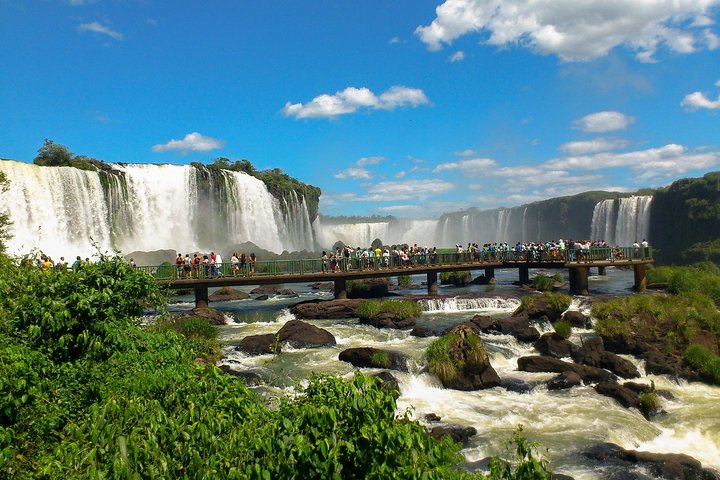

This tour takes you across the border to the Brazilian side of Iguazu Falls, which is famous for its panoramic views of the entire waterfall system. While the majority of the falls are located in Argentina, the Brazilian park provides the best vantage point to see the scale of the water as it pours over the cliffs. You will follow a well-maintained walkway that runs along the edge of the canyon, offering constant views of the cascades across the river. The path leads to the Devil’s Throat, the most powerful section of the falls. A walkway extends over the water to a viewing platform where you can stand near the edge of the drop and feel the spray. You will also see the Floriano Fall from several different angles before completing the walk. The pace is relaxed, allowing you to stop at various viewpoints along the trail to take photos and observe the surrounding rainforest.
For a full refund, cancel at least 24 hours before the scheduled departure time.
English, Spanish