
About All Tours Helicopter Ride Tours2-Day ToursFrom Buenos Aires ToursBoat ToursPrivate ToursBoth Sides ToursArgentina Side ToursBrazil Side ToursFull Moon Tours Directions Hours & Fees
Find Tours 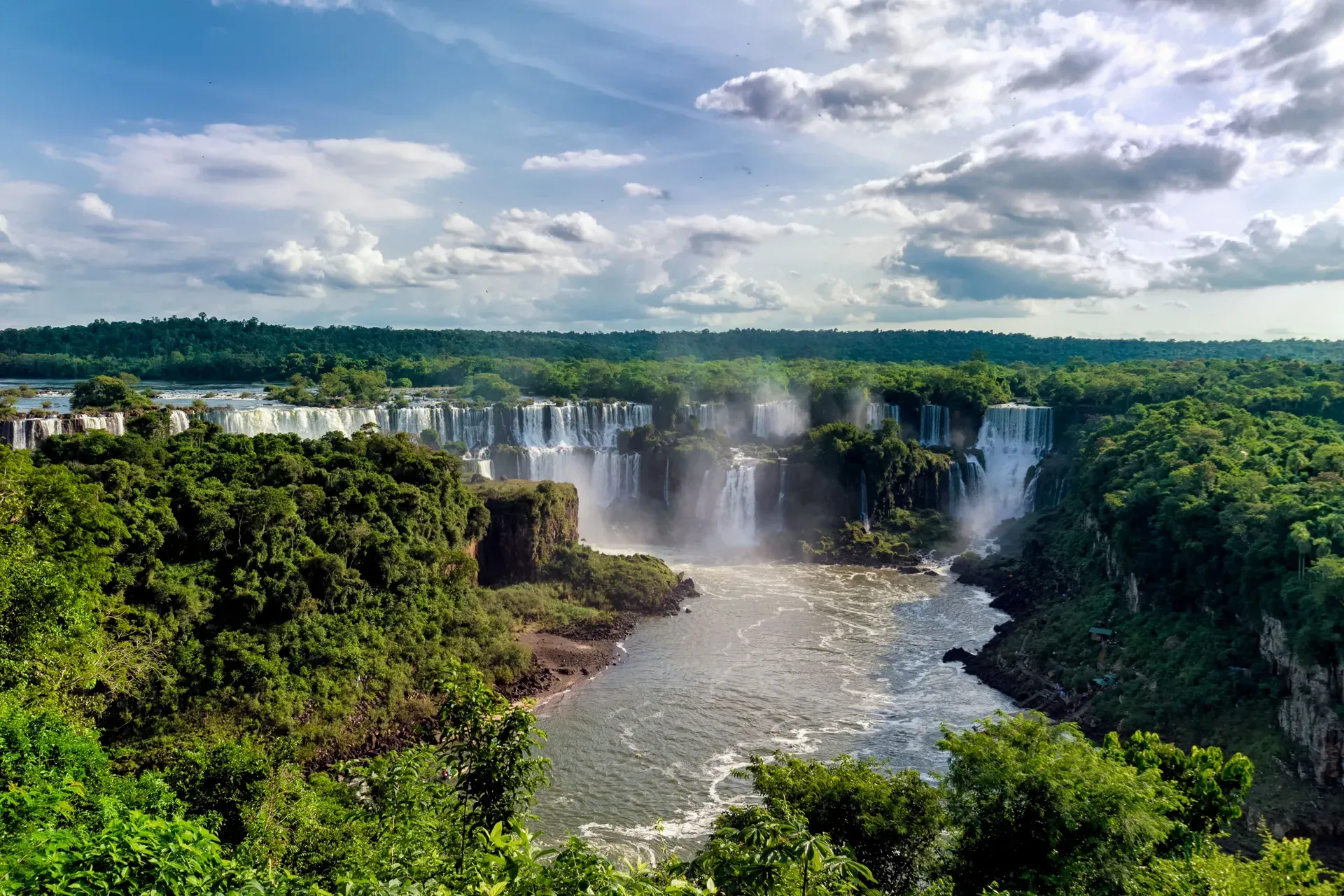
Iguazu Falls forms the world's largest waterfall system, discharging 1.8 million liters of water per second across the Argentina-Brazil border. The 275 individual cataracts cut through Quaternary basaltic rock surrounded by subtropical rainforest.
Two hundred and seventy-five distinct waterfalls crash over a 2.7-kilometer basalt rim, forming the largest waterfall system on Earth. Iguazu Falls straddles the border between Argentina's Misiones province and Brazil's Paraná state. The Iguazu River feeds this massive geological fault, dumping an average of 1.8 million liters of water per second into the canyon below. Both nations protect the surrounding land within dedicated national parks, preserving a humid subtropical rainforest that harbors over 2,000 vascular plant species.
Visitors approach the falls through dense vegetation. The spray hits your face 50 meters before you reach the main viewing platforms. On the Argentine side, a network of suspended steel footbridges puts you directly over the rushing currents. You feel the intense, soaking mist and hear the deafening roar of the 82-meter-high Garganta del Diablo, or Devil's Throat. The 2.5-kilometer Lower Circuit trail drops you into the thick of the jungle, bringing you face-to-face with the heavy currents of Salto Bosetti and Dos Hermanas Falls.
The Brazilian side offers a completely different perspective. A 1.4-kilometer paved trail winds along the canyon edge, delivering wide-angle views of the entire horseshoe-shaped system. The path ends at a steel walkway extending directly over the gushing waters. A step-free panoramic elevator then lifts visitors to the high cliffs of Porto Canoas for an aerial view of the mist clouds rising from the gorge.
Crossing the international border requires clearing two separate immigration posts. Lines at the checkpoints often stretch for an hour during the peak months of January and July. Summer temperatures frequently exceed 30°C (86°F) with intense humidity, making the exposed metal walkways physically draining. Plan for a minimum of two days to see the complete system. Dedicate six to eight hours for Argentina's extensive trails and three to four hours for Brazil's panoramic viewpoints. Purchase your tickets online to bypass the 60-minute gate queues that form every morning.
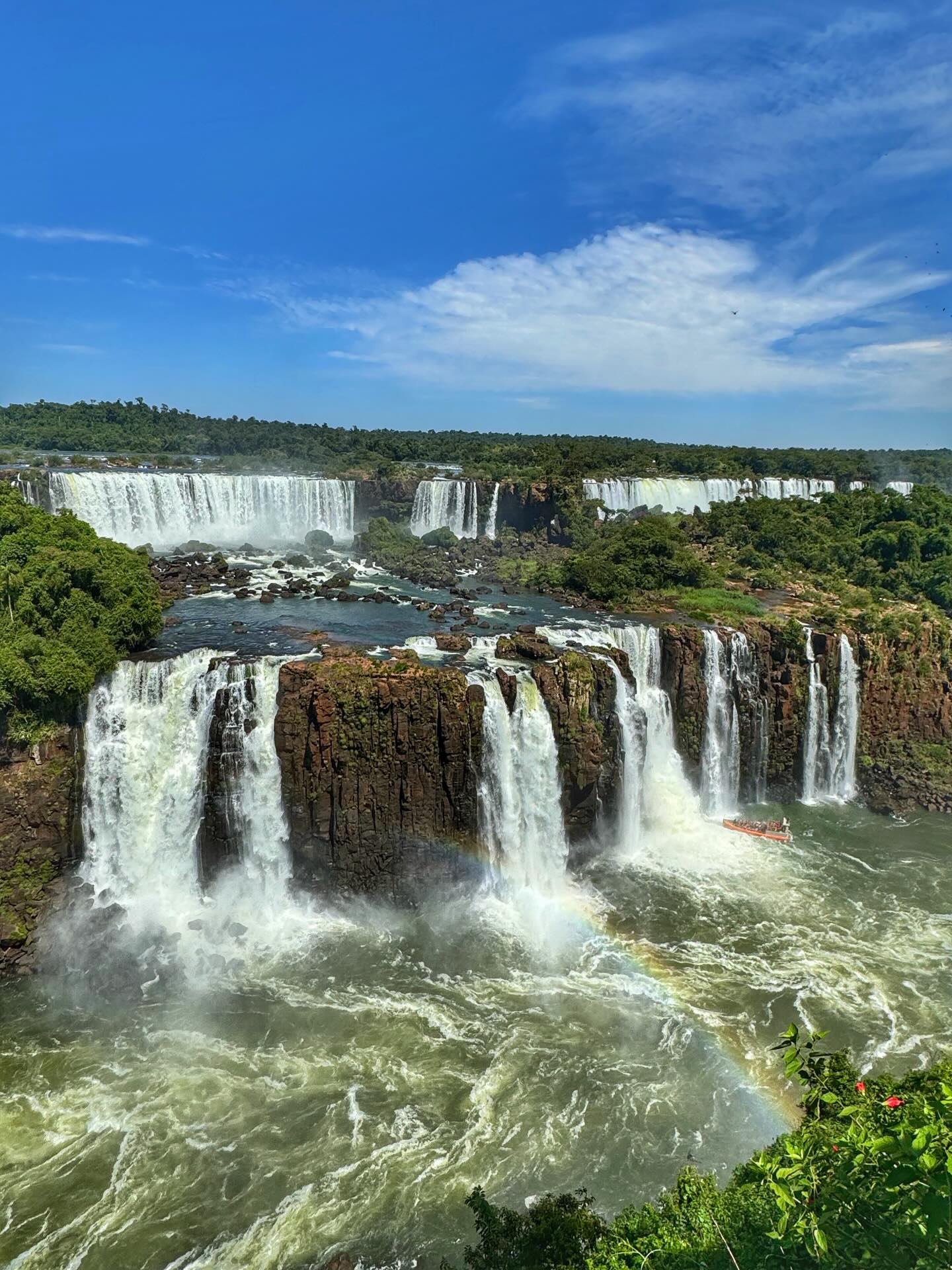
Hunter-gatherers of the Eldoradense culture occupied the riverbanks surrounding the falls 10,000 years ago. They utilized the dense forest resources and navigated the upper river networks until the Guaraní people displaced them around 1,000 C.E. The Guaraní introduced agriculture and established permanent settlements along the water. They named the site Iguazu, translating to "big water" in their native tongue. Spanish Conquistador Álvar Núñez Cabeza de Vaca recorded the first European sighting of the cataracts in 1541 while searching for a route to Asunción. He named them "Saltos de Santa María." The Spanish moniker failed to stick, and the original indigenous name survived the colonial era.
The dense jungle kept the falls isolated from mass settlement for centuries. The region remained a remote frontier until the late 19th century. In 1897, Brazilian army officer Edmundo de Barros mapped the area and recognized the need to protect the ecosystem from aggressive logging operations. He proposed the establishment of a national park to shield the watershed. Decades of political lobbying and land surveys followed his initial proposal. Argentina took the first step, establishing Iguazú National Park in 1934 to secure the southern bank. Brazil followed suit five years later, creating Iguaçu National Park in 1939. These protective measures secured the surrounding Atlantic rainforest, a highly threatened biome that currently shelters rare animals like jaguars, tapirs, and harpy eagles.
Tourism infrastructure expanded rapidly throughout the late 20th century to accommodate global interest. Both nations constructed extensive walkway systems, visitor centers, and transportation networks. UNESCO designated the Argentine park a World Heritage Site in 1984, adding the Brazilian park in 1986. The New Seven Wonders of Nature campaign elevated the site's profile in 2011, driving annual visitation into the millions.
Managing this massive influx of international visitors requires constant adaptation. Heavy summer rains frequently flood the Iguazu River, submerging and occasionally washing away sections of the steel footbridges. Severe floods frequently destroy the Devil's Throat walkway, forcing months of costly reconstruction. Park authorities close the main trails during these high-water events to prevent accidents. Check the official park websites each morning before departing your hotel to confirm trail statuses and avoid paying full admission for restricted access.
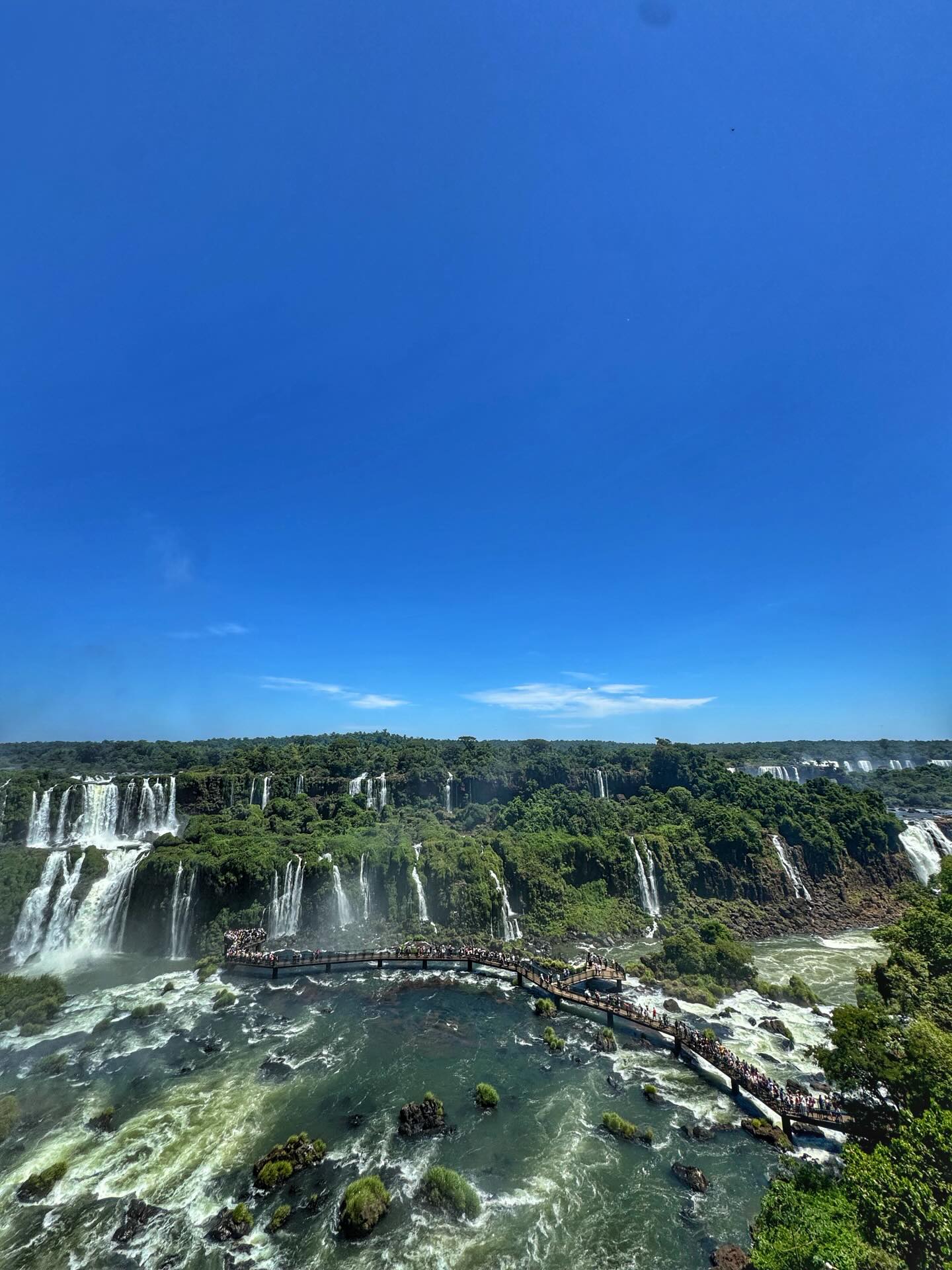
Quaternary basaltic volcanic rocks form the foundation of the falls. These dark, jagged cliffs belong to the Serra Geral Formation, dating back 115 to 125 million years. The Iguazu River flows across this hardened lava plateau before plunging into a massive geological fault line. This sudden drop creates a 2.7-kilometer elongated horseshoe shape, splitting the river into roughly 275 individual cataracts. The exact number of waterfalls fluctuates daily based on the river's volume, which averages 1.8 million liters per second but spikes dramatically during the rainy season.
The Garganta del Diablo commands the center of the system. This U-shaped chasm measures 82 meters high, 150 meters wide, and 700 meters long. Half of the river's total volume crashes into this single gorge. The impact generates a permanent cloud of mist that rises hundreds of feet into the air, visible from miles away. The sheer force of the water creates a deafening roar that drowns out all conversation on the viewing platforms. Below the falls, the river narrows significantly, churning through a deep canyon before joining the Alto Paraná River 23 kilometers downstream.
Eighty percent of the waterfall system lies within Argentine territory. This geographical division dictates the trail layouts. Argentina's side features a complex, multi-tiered network of paths. The Upper Circuit spans one mile of elevated steel bridges suspended directly over the water's edge. The Lower Circuit drops 2.5 kilometers into the forest, offering ground-level views of Salto Bosetti. Brazil's 20 percent of the falls provides the necessary distance to view the Argentine cascades in their entirety.
Red, iron-rich soil covers the surrounding terrain. This dirt stains clothing instantly, making light-colored shoes a poor choice for the trails. The humid subtropical climate feeds a dense Atlantic rainforest canopy that aggressively reclaims any cleared land. Over 2,000 vascular plant species thrive in this saturated environment, creating a thick wall of green around the basalt cliffs. Coatis—raccoon-like mammals with long snouts—patrol the wooden walkways and food courts. They carry diseases and possess sharp claws used for tearing into backpacks. Keep all food sealed in airtight containers and maintain a strict distance from the wildlife.
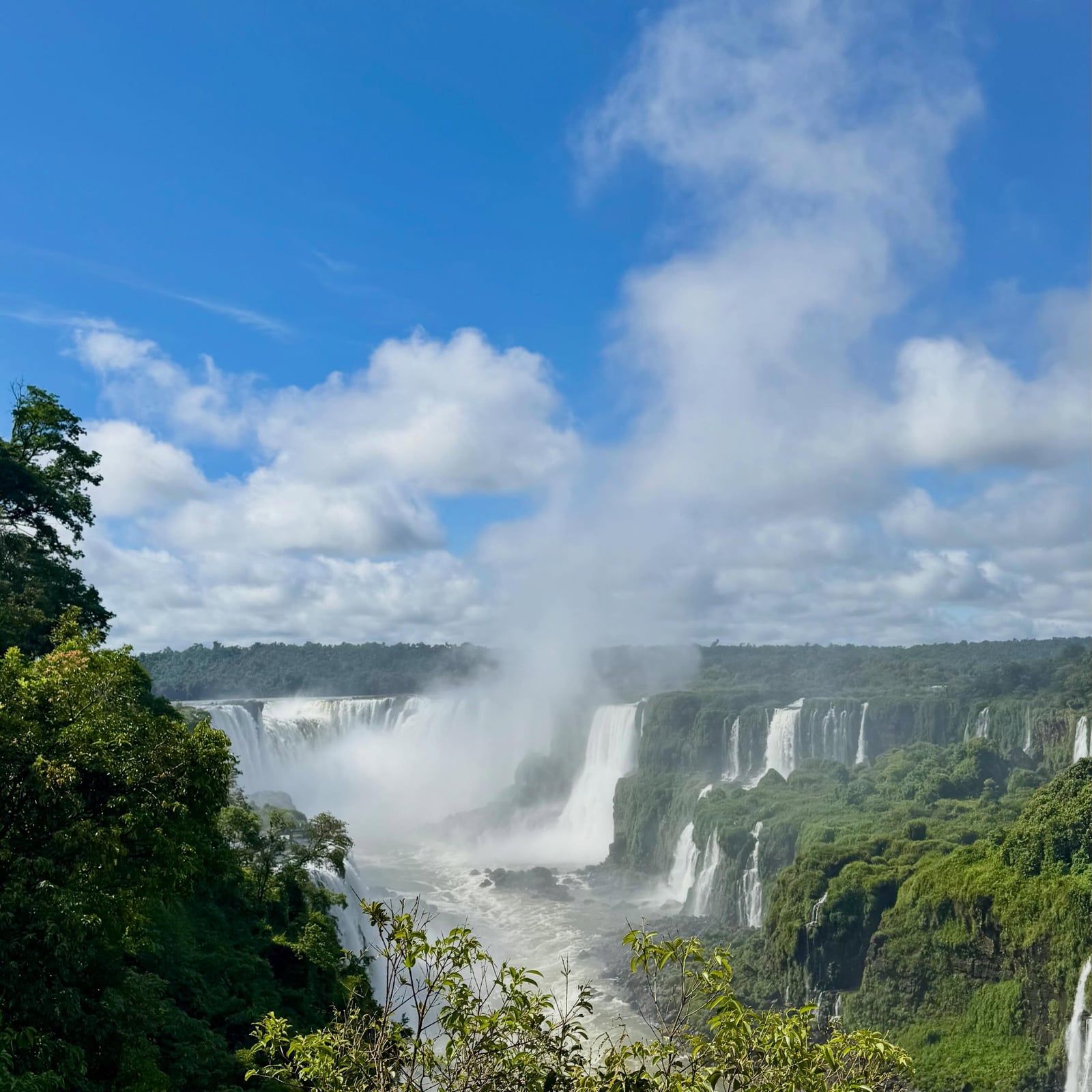
The Guaraní people trace their origins to the banks of the Iguazu River. Their creation myth centers on a powerful serpent deity named M'Boi. According to oral tradition, a young warrior named Tarobá fled down the river in a canoe with Naipí, a woman promised to the deity. Enraged by the betrayal, M'Boi sliced the riverbed in half, creating the massive waterfalls to condemn the lovers to an eternal fall. The myth perfectly mirrors the violent, sudden drop of the geological fault line. Naipí transformed into a rock at the base of the falls, constantly battered by the water, while Tarobá became a palm tree on the canyon edge, forever reaching toward her.
The falls anchor the regional identity of the Misiones province in Argentina and Paraná state in Brazil. The site dictates the local economy, driving employment in the border towns of Puerto Iguazú and Foz do Iguaçu. Indigenous communities still inhabit the surrounding protected zones. They maintain their cultural presence by selling traditional wood carvings, seed jewelry, and woven baskets near the park entrances. The falls also mark the last major stronghold of the inland Atlantic Forest, acting as a physical barrier against agricultural expansion.
The broader cultural landscape of the region reflects a history of colonization and resource extraction. San Ignacio Miní sits a few hours south of the falls. Built in 1632 from local red sandstone, these Jesuit ruins demonstrate the historical collision between European missionaries and the Guaraní. The site highlights a complex era of forced assimilation, agricultural expansion, and architectural fusion. The ruins earned UNESCO World Heritage status in 1984, the same year as the national park. Combine a trip to the ruins with the Wanda Mines to see raw amethyst and quartz embedded directly in the region's volcanic basalt.
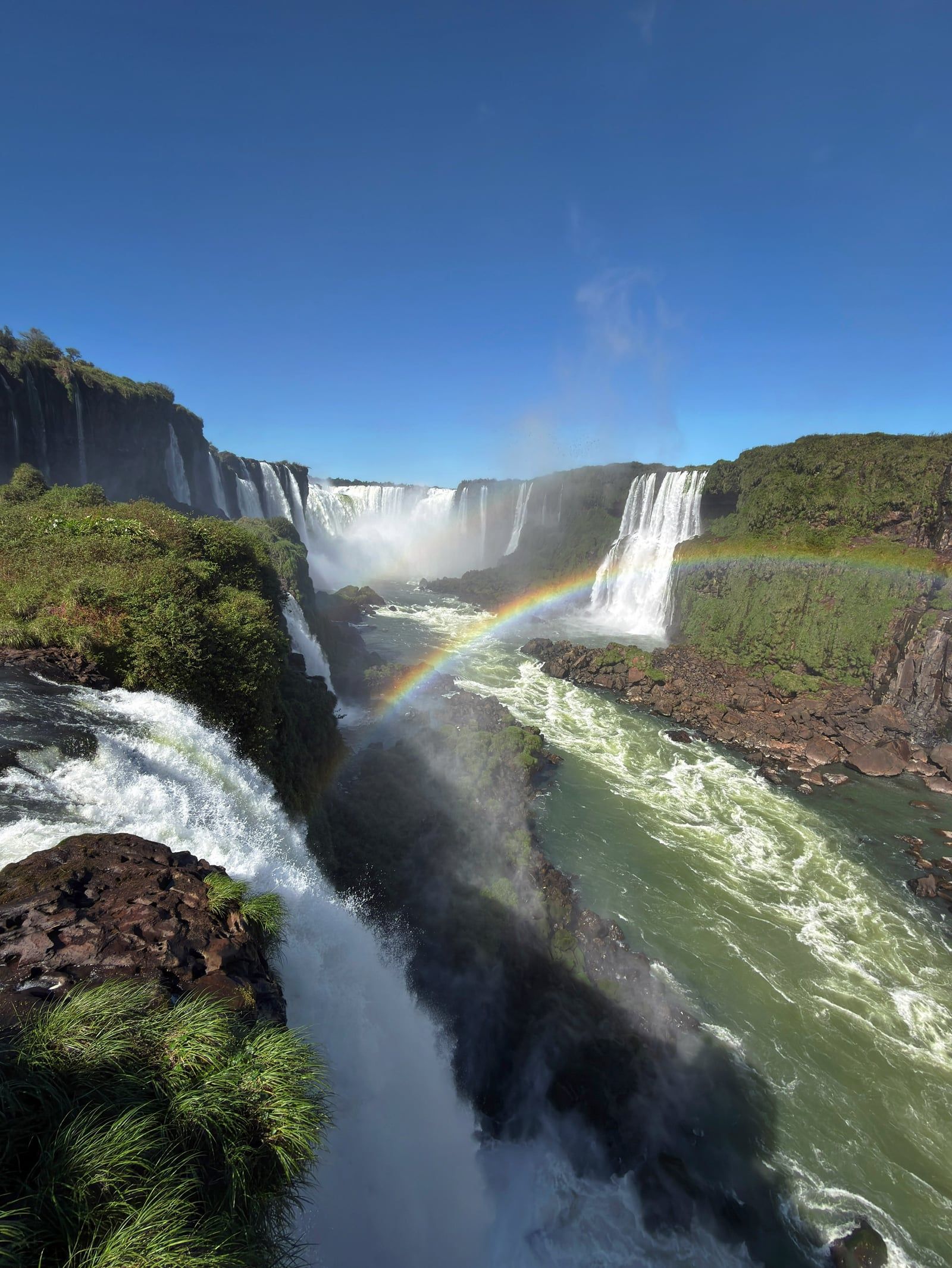
The system splits into nearly 300 distinct cascades depending on the river's water level.
Eighty percent of the river and its waterfalls lie within Argentine territory.
Argentina operates a free, gas-powered narrow-gauge train that transports visitors 7 kilometers through the rainforest.
Argentina prohibits helicopter tours to protect wildlife from noise pollution, though Brazil still permits them.
Flying personal drones is strictly forbidden in both parks to prevent wildlife disturbance and accidents.
The parks' raccoon-like inhabitants frequently bite tourists who attempt to feed or touch them.
The falls discharge enough water every second to fill nearly an entire Olympic-sized swimming pool.
The system contains approximately 275 individual cataracts. These cascades stretch along a 2.7-kilometer horseshoe-shaped front, dropping between 60 and 82 meters.
Both sides provide distinct experiences. The Argentine side holds 80% of the falls and features extensive walkways over the water. The Brazilian side delivers wide panoramic views of the entire canyon.
Foreign tourists pay 35,000 ARS (roughly $32 to $44.50 USD). Keep your physical ticket to receive a 50% discount on a second consecutive day of entry.
The park operates Monday through Friday from 9:00 AM to 5:30 PM, with the last entry at 4:00 PM. Weekend and holiday access begins 30 minutes earlier at 8:30 AM.
Yes. The Argentine side features adapted steel walkways and ramps across 90% of its circuits. The Brazilian side uses step-free panoramic buses and an elevator to reach the main viewpoints.
No. Park authorities strictly prohibit drone flights without official, pre-arranged commercial permits. This rule protects native birds and prevents equipment from falling into the gorge.
Rio Uruguay runs public buses from the town's main terminal on Avenida Córdoba every 20 to 30 minutes. The 18-kilometer ride takes 30 minutes and costs under $2 USD.
Argentina operates a gas-powered, narrow-gauge train that runs 7 kilometers through the jungle. The ride is free with park admission and connects the entrance to the Devil's Throat trailhead.
Both parks offer high-speed twin-engine speedboat excursions. The captains drive directly into the spray at the base of the falls, completely soaking all passengers.
Yes. The falls sit on the international border between Argentina and Brazil. You must clear immigration and receive physical stamps when crossing between the two parks.
Browse verified tours with free cancellation and instant confirmation.
Find Tours